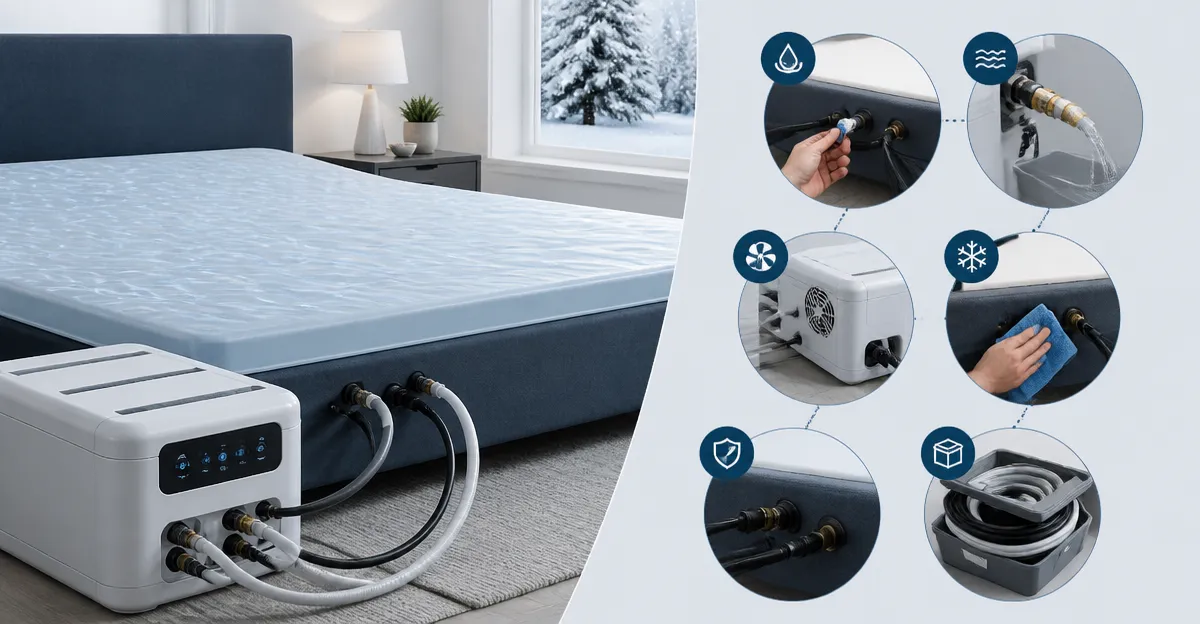
How to Winterize Your Water‑Cooled Mattress System: Step‑by‑Step DIY Guide to Prevent Freezing Damage
Introduction
Winter poses a hidden threat to water‑cooled mattress systems such as the Adamson B10 Cooling Mattress Pad. When ambient temperatures drop below freezing, the water circulating through the silicone tubes can solidify, expanding and potentially rupturing the tubing or the base unit. This guide teaches homeowners how to safely prepare their system for cold weather, protect the mattress pad, and store components so that performance is retained for the next cooling season. The instructions are practical, require minimal tools, and reference proven products that simplify each step.
What You’ll Need
- Your water‑cooled mattress system (e.g., Adamson B10 or Sleepme Chilipad Cube)
- Absorbent towels or a shallow tray for draining water
- Gentle detergent and a soft cloth for cleaning
- Protective cover for the mattress pad – consider the ELNIDO QUEEN Cooling Mattress Pad
- Optional insulated storage bag or a spare blanket to wrap the base unit
- Thermometer to verify indoor temperature stays above 40°F (4°C)
Step‑by‑Step Instructions
1. Disconnect Power and Drain All Water
The first priority is to stop the flow of water and remove every drop from the system. Unplug the base unit and locate the drain valve or the quick‑release connector on the pad. Place a shallow tray or large towel beneath the outlet and open the valve slowly to allow water to escape. The Adamson B10 Cooling Mattress Pad features a built‑in remote with four fan speeds; however, the remote is irrelevant during winterization because the unit will remain off.
Why this matters: Water expands by roughly 9 % when it freezes. Any residual water trapped in the silicone tubes can exert pressure that leads to cracks, which are costly to repair. Draining completely eliminates that risk.
2. Clean the Tubes and Base Unit
After draining, wipe the exterior of the base unit with a damp cloth and a mild detergent. For the internal tubing, fill the pad with a small amount of warm (not hot) water mixed with a few drops of dish soap, run the fan on the lowest speed for two minutes, then drain again. This process removes mineral deposits that could become brittle in cold weather.
The Elegear Cooling Mattress Pad uses a PCM cooling print layer that can retain moisture; cleaning it in a similar fashion prevents mold formation during storage. Its breathable TriSupport 3D mesh also dries quickly, reducing the chance of lingering dampness.
Why this matters: Clean tubes reduce the likelihood of blockages when the system is re‑activated in spring, and they prevent corrosion that could weaken the silicone over time.
3. Inspect for Wear and Repair If Needed
Examine the silicone tubes, connectors, and the TPU waterproof backing of any mattress pad you plan to keep attached. Look for cracks, fraying, or discoloration. The ELNIDO QUEEN Cooling Mattress Pad offers a 100 % waterproof TPU layer that is both noiseless and durable; if this layer shows signs of wear, replace the pad rather than risk water leakage.
Why this matters: Early detection of damage avoids emergency repairs after a freeze, which can be both time‑consuming and expensive.
4. Protect the Mattress Pad from Moisture and Dust
Store the mattress pad in a dry environment. If you have limited storage space, wrap the pad in a breathable cotton sheet or a thin plastic cover that does not trap moisture. The ELNIDO QUEEN Cooling Mattress Pad is priced at $59.99, holds a 4.8‑star rating from 37 reviews, and combines a bamboo‑infused cooling cover with a silent waterproof backing. Its deep‑pocket elastic ensures a snug fit, preventing the pad from shifting while stored.
Why this matters: Dust and humidity can degrade the bamboo viscose fibers, reducing the pad’s cooling performance when you reinstall it in summer.
5. Insulate the Base Unit
The base unit of a water‑cooled system contains the water reservoir and pump. To keep any residual water from freezing, place the unit in a insulated container or wrap it with a spare blanket. If you prefer an active heat source, the Sleepme Chilipad Cube can be set to a low‑heat mode (minimum 60°F) during extreme cold snaps, ensuring the water stays above freezing while the rest of the house is unheated.
Product snapshot: Sleepme Chilipad Cube costs $629.10, carries a 4‑star rating from 965 reviews, and provides a temperature range of 60‑115°F. Its water‑based system circulates through silicone micro‑tubes, identical in principle to the Adamson B10, but it also offers heating capability, making it a versatile winter safeguard.
Why this matters: Insulation or gentle heating prevents the water from reaching its freezing point, protecting the pump and tubing from expansion‑induced damage.
6. Store in a Temperature‑Controlled Space
Place the insulated base unit and the cleaned mattress pad in a room where temperature remains above 40°F (4°C). A garage that is heated, a basement, or a spare bedroom works well. Use a digital thermometer to monitor the environment for at least three nights after setup.
Why this matters: Even with insulation, prolonged exposure to sub‑freezing air can eventually chill the water inside the sealed system. Maintaining a minimum temperature eliminates that risk.
7. Document Settings for Spring Re‑Activation
Before sealing everything away, write down the fan speed, duration settings, and any custom temperature presets you used during the summer. This information speeds up the re‑start process when the cooling season returns.
Why this matters: The Adamson B10 remote lacks a display; keeping a written record prevents guesswork and ensures optimal comfort from day one of re‑use.
Tips & Pro Tips
- Label all hoses. Use colored tape to mark the inlet and outlet; this reduces confusion during re‑assembly.
- Use distilled water. If you refill the reservoir for occasional winter testing, distilled water minimizes mineral buildup.
- Check seals. The TPU backing on the ELNIDO QUEEN Cooling Mattress Pad is designed to be noiseless; a torn seal can let moisture seep in, so verify its integrity.
- Consider a low‑heat setting. If you live in a region where indoor temperature drops below 35°F, set the Sleepme Chilipad Cube to 65°F for a few hours each night to keep the water circulating.
Troubleshooting
| Problem | Possible Cause | Solution |
|---|---|---|
| No water flow after winter | Air trapped in tubes | Open the drain valve, fill with water, and run the fan on high for 3 minutes to purge air. |
| Unusual noise from base unit | Ice formation inside pump | Move unit to a warmer room, allow it to thaw, then run a short test cycle. |
| Pad feels damp after storage | Insufficient drying | Lay pad flat in a well‑ventilated area, use a fan to accelerate drying before re‑use. |
Conclusion
Winterizing a water‑cooled mattress system protects a significant investment and ensures uninterrupted comfort when summer returns. By draining, cleaning, inspecting, and insulating the components—and by using reliable accessories such as the ELNIDO QUEEN Cooling Mattress Pad, Elegear Cooling Mattress Pad, and the Sleepme Chilipad Cube, homeowners can avoid freeze‑related failures and enjoy a hassle‑free transition between seasons.
Products Mentioned in This Guide
Frequently Asked Questions
Why must I winterize a water‑cooled mattress system?
Freezing temperatures can cause the circulating water to expand and rupture silicone tubes or the base unit, leading to costly damage.
What is the first step in preparing my water‑cooled mattress for winter?
Turn off the system, unplug it, and disconnect the power supply before draining any remaining water.
How do I safely drain the water from the cooling unit?
Place an absorbent towel or shallow tray beneath the drain valve, open the valve, and let the water flow out completely.
Can I use regular detergent to clean the mattress pad after draining?
Yes, a gentle detergent and soft cloth will remove residue without harming the silicone tubing.
What should I store the mattress pad and components in during the off‑season?
Wrap the pad in a breathable protective cover and keep all parts in a dry, temperature‑controlled area away from direct sunlight.