Introduction
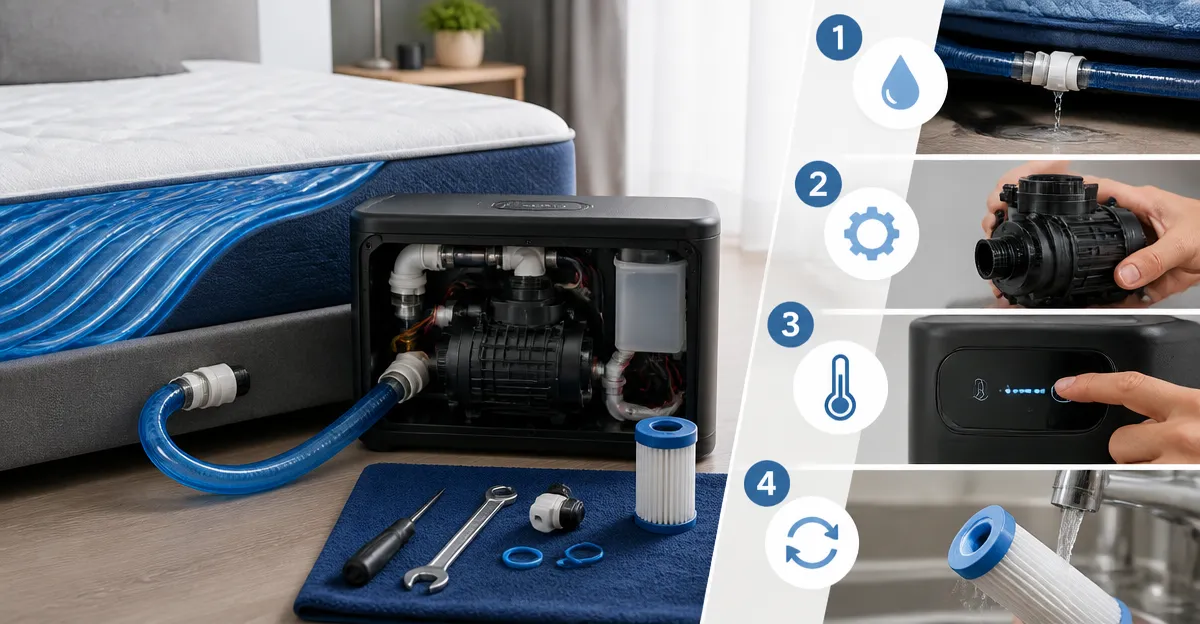
This guide teaches readers how to diagnose and repair the most common problems that affect water‑cooled mattress systems. Whether the unit is leaking, the pump has stopped, or the temperature feels inconsistent, the step‑by‑step instructions below will enable a user to restore optimal cooling performance. The information is valuable because a functional cooling pad can improve sleep quality, reduce night sweats, and prevent costly replacements.
What You’ll Need
- Phillips screwdriver – for removing panels and tightening loose screws.
- Soft microfiber cloth – to wipe moisture without scratching surfaces.
- White distilled vinegar – effective for removing calcium buildup in the reservoir.
- Small bucket or tray – to catch water when draining the system.
- Replacement sealing tape or hose clamps – for fixing minor leaks.
- Adamson B10 Bed Cooling Pad – a reliable, cotton‑based cooling pad that serves as a spare or upgrade.
- Sleepme Chilipad Cube – a versatile water‑based system useful for testing alternative pump performance.
Step 1: Inspect for Leaks
Begin by disconnecting the unit from power and removing it from the nightstand. Place a bucket underneath the hose connection to catch any escaping water. Examine the silicone tubes for cracks, and check the elastic straps for wear. If a leak is found, tighten the hose clamps or apply replacement sealing tape. In cases where the tube itself is damaged, consider swapping the pad with a fresh Adamson B10 Bed Cooling Pad. This product uses 100% cotton fabric and soft silicone tubes, which are less prone to cracking than PVC alternatives, making it a durable backup.
Step 2: Clean the Reservoir and Tubes
Scale buildup is a frequent cause of reduced water flow. Fill the reservoir with a mixture of one part white distilled vinegar and three parts water. Run the unit on the highest fan speed for five minutes to circulate the solution through the tubes. After circulation, disconnect the power, drain the solution into a sink, and rinse the reservoir with clean water. Use a soft cloth to wipe the interior of the evaporative pad. The Sleepme Chilipad Cube includes a removable water tank that can be fully emptied, which serves as a useful reference for how a clean tank should look. Regular cleaning every two weeks prevents the slime layer that reviewers have reported on similar systems.
Step 3: Test the Pump and Fan
Re‑fill the reservoir with fresh water to the recommended half‑gallon level. Power the unit and listen for the pump’s hum. A functioning pump produces a low, steady sound; a rattling or silent pump indicates a mechanical fault. If the pump is silent, verify that the power cord is securely plugged and that the circuit breaker has not tripped. Should the pump still fail, the warranty offered with the Adamson B10 Bed Cooling Pad includes a five‑year assurance and 24/7 support, providing a straightforward replacement pathway.
Step 4: Calibrate Temperature Settings
After confirming water flow, adjust the remote control to the desired fan speed. The B10 pad offers four fan speeds; lower settings provide gentle cooling suitable for warm climates, while higher settings deliver a more noticeable temperature drop. Use a digital thermometer to measure the mattress surface after ten minutes. If the temperature does not change by at least 4 °F, increase the fan speed or verify that the water level is adequate. The Sleepme Chilipad Cube allows temperature ranges from 60 °F to 115 °F, making it an excellent benchmark for verifying that your system can reach the expected cooling range.
Step 5: Secure the Pad and Connections
Proper placement of the cooling pad prevents shifting that can cause uneven cooling or additional wear on the elastic straps. Lay the pad on the mattress, then thread the elastic bands under the mattress and secure them with additional bed‑sheet fasteners if necessary. Reviewers have noted that the original straps may stretch over time; reinforcing them with sheet fasteners ensures the pad stays flat throughout the night. Finally, route the hose away from nightstand edges to avoid accidental knocks.
Tips & Pro Tips
- Mark the water line. Use a permanent marker on the reservoir to indicate the optimal half‑gallon level. This prevents overfilling, which can cause overflow.
- Use RO water. Reverse‑osmosis water reduces mineral deposits, extending the life of the pump and evaporative pad.
- Elevate the base unit. Place the cooling unit on a small stand so it sits higher than the mattress pad. This improves pump suction and reduces the risk of air bubbles.
- Schedule cleaning. Set a calendar reminder for a bi‑weekly cleaning routine to avoid the slime buildup reported by some users.
- Check the warranty. Both the Adamson and Sleepme products provide multi‑year warranties; keep purchase receipts handy for quick service.
Troubleshooting Common Issues
| Problem | Possible Cause | Solution |
|---|---|---|
| Water leaks from hose | Loose clamp or cracked silicone tube | Tighten clamp, replace tube, or switch to a new Adamson B10 Bed Cooling Pad |
| No cooling effect | Insufficient water level or blocked pump | Refill to marked level, clean pump with vinegar solution, verify pump sound. |
| Excessive noise | Worn fan bearings or debris in fan housing | Power off, open housing, clean debris, consider replacing fan with a quiet model (e.g., Noctua). |
| Temperature fluctuations | Air bubbles in tubing | Bleed the system by gently tilting the pad while the unit runs, allowing trapped air to escape. |
Conclusion
By following the systematic inspection, cleaning, and calibration steps outlined above, one can restore reliable performance to any water‑cooled mattress system. Regular maintenance, proper sealing, and the occasional upgrade with a high‑quality pad such as the Adamson B10 Bed Cooling Pad or the Sleepme Chilipad Cube ensure long‑term comfort and reduce night‑time overheating. Readers are encouraged to apply these practices, keep a cleaning schedule, and contact the manufacturers’ support teams when warranty coverage applies.
Products Mentioned in This Guide
Frequently Asked Questions
How can I identify a leak in my water‑cooled mattress system?
Inspect the reservoir, hoses, and connections for moisture or drips, and use a dry microfiber cloth to spot wet spots after the unit has been off for a few hours.
What should I do if the cooling pump stops working?
First check that the pump is securely plugged in and the power switch is on, then verify that no debris blocks the inlet and that the pump’s impeller spins freely.
How do I remove calcium buildup from the reservoir?
Drain the system into a bucket, fill the reservoir with a mixture of white distilled vinegar and water (1:1), let it sit for 15‑20 minutes, then flush with clean water.
Which tools are needed to tighten loose panels and seals?
A Phillips screwdriver for panel screws and replacement sealing tape or hose clamps to secure any loose connections or minor leaks.
Can I replace a faulty cooling pad with an Adamson B10 Bed Cooling Pad?
Yes, the Adamson B10 is a compatible cotton‑based pad that can serve as a direct replacement or upgrade for most water‑cooled mattress systems.