Introduction
This guide explains how temperature influences sleep and why aligning bed cooling with the body’s natural circadian rhythm can enhance restorative rest. Readers will learn the science behind nightly temperature drops, practical strategies for timing cooling, and how to select devices that complement individual sleep patterns. The article also provides a comparison of leading cooling solutions, actionable best‑practice tips, and answers to common questions.
Background/Context
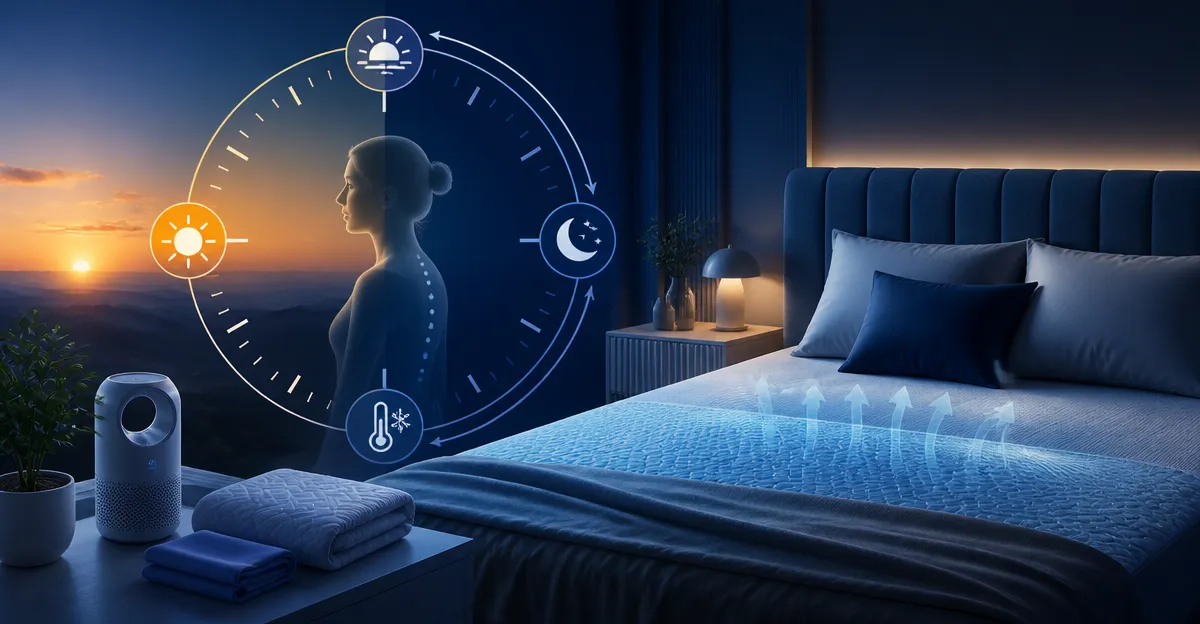
The human body follows a roughly 24‑hour cycle known as the circadian rhythm, which regulates core temperature, hormone release, and alertness. During the evening, the hypothalamus signals a gradual decline in core temperature, typically by 1–2°F, to prepare for sleep onset. A cooler skin temperature facilitates blood flow to peripheral areas, promoting the onset of rapid eye movement (REM) and deep non‑REM stages. Disruptions to this natural cooling process, such as night sweats or overly warm bedroom environments, can delay sleep onset and fragment sleep architecture.
Modern lifestyles often expose sleepers to elevated ambient temperatures, heavy bedding, or insufficient airflow. While air‑conditioning can lower room temperature, it may not address the microclimate directly surrounding the sleeper. Targeted bed‑level cooling offers a precise method to assist the body’s thermoregulatory mechanisms without excessive energy consumption.
Understanding Circadian Rhythm and Temperature
Core temperature typically reaches its lowest point between 02:00 and 04:00 local time. Peripheral skin temperature, however, begins to rise earlier in the evening as blood vessels dilate, allowing heat to dissipate through the extremities. This vasodilation is a key signal for the brain to initiate sleep. When the skin remains warm, the brain interprets the environment as unsuitable for sleep, leading to prolonged sleep latency.
Researchers recommend a bedroom temperature of 60–64°F (15–18°C) for optimal sleep, yet individual preferences vary. Hot sleepers benefit from active cooling, whereas cold sleepers may require a modest warming function. Devices that can adjust temperature hour by hour enable users to mirror the natural temperature curve, supporting a smoother transition from wakefulness to deep sleep.
Timing Your Bed Cooling
Effective timing involves three phases: pre‑sleep preparation, sleep onset, and maintenance through the night. In the pre‑sleep phase, lowering the bed temperature 30–40 minutes before lights out can accelerate the decline in core temperature. During sleep onset, a brief burst of cool airflow or a gentle temperature drop helps signal the body to begin the sleep cascade. Throughout the night, a gradual increase in temperature mimics the natural rise that occurs before awakening, reducing early‑morning awakenings.
Many modern cooling systems incorporate programmable schedules that align with these phases. Users can set distinct temperature targets for each hour, allowing the device to automatically adjust without manual intervention. This automation reduces the likelihood of disruptive adjustments in the middle of the night.
Choosing the Right Cooling Solution
When selecting a cooling product, consider the following criteria: size compatibility with the mattress, method of heat exchange (air versus water), noise level, and whether heating capability is also desired. Some sleepers prefer an air‑based system that delivers a gentle breeze, while others favor a water‑circulated pad that provides uniform temperature across the entire surface.
For those who value rapid temperature changes and the option to heat during winter, the BedJet Climate Fan offers on‑demand airflow and a heating mode that warms the bed up to fifteen times faster than traditional electric blankets. Its wireless LCD remote and free Bluetooth app allow precise control of airflow speed, temperature, and hourly programming. The system is compatible with any mattress size, including adjustable bases, and has earned a 4.4‑star rating from over 2,600 reviewers who praise its immediate cooling effect and long‑term reliability.
For sleepers who prefer a water‑based solution, the Chilipad Cube circulates temperature‑controlled water through a thin silicone mattress topper. The Cube provides a temperature range of 60–115°F, enabling both cooling and heating. Users can set the exact temperature for each side of a split bed, making it suitable for couples with differing preferences. Although the unit requires periodic water changes and occasional maintenance, reviewers note its effectiveness in eliminating night sweats and its quiet operation.
For individuals seeking a passive cooling layer without electronics, the inhand Cooling Blanket utilizes a specialized cooling nylon fabric that absorbs body heat and lowers skin temperature by up to 9°F. The blanket is lightweight, breathable, and Oeko‑tex certified, making it safe for direct skin contact. Its tie‑dye design adds aesthetic appeal while providing a cost‑effective solution at $24.98.
When the primary goal is to combine cooling with a supportive mattress, the EGOHOME Memory Foam Mattress incorporates green‑tea infused foam and a bubble‑hole structure that enhances airflow. The medium‑firm feel supports spinal alignment while the infused gel helps regulate temperature. Reviewers commend its thick, comfortable construction and lack of off‑gassing, and it carries a 4.3‑star rating from over 13,000 customers.
Another versatile option is the Zinus Cooling Memory Foam Mattress, which features a cooling gel layer and a breathable cover. The medium comfort level is designed for side, back, and combination sleepers, and the mattress is CertiPUR‑US and OEKO‑TX certified for safety. At $204.99, it offers a balance of affordability and performance, with a 4.3‑star rating from more than 6,000 reviewers.
Comparison/Selection Guide
| Feature | BedJet Climate Fan | Chilipad Cube | inhand Cooling Blanket | EGOHOME Mattress | Zinus Mattress |
|---|---|---|---|---|---|
| Cooling Method | Airflow via vent | Water‑circulated silicone pad | Cooling nylon fabric | Green‑tea infused foam with bubble holes | Cooling gel memory foam |
| Heating Capability | Yes, rapid warm air | Yes, water heating | No | No | No |
| Control Interface | Remote + Bluetooth app | Remote control unit | None (passive) | None (passive) | None (passive) |
| Price (USD) | 417.00 | 629.10 | 24.98 | 219.99 | 204.99 |
| Average Rating | 4.4/5 | 4/5 | 4.3/5 | 4.3/5 | 4.3/5 |
| Installation | Place unit under fitted sheet | Attach pad to mattress, place Cube under bed | Lay blanket over sheets | Unbox, expand 24–72 hrs | Unbox, expand 24–72 hrs |
For a user who desires precise, programmable temperature control and occasional heating, the BedJet Climate Fan presents the most versatile solution despite its higher cost. Those who prefer a uniform temperature across the mattress surface and are comfortable with periodic maintenance may find the Chilipad Cube superior. Budget‑conscious sleepers seeking a simple, low‑maintenance option can benefit from the inhand Cooling Blanket, while individuals planning a mattress replacement can consider the EGOHOME or Zinus models, each offering built‑in cooling technologies.
Best Practices & Tips
- Program a gradual temperature decline beginning 30 minutes before bedtime to synchronize with the body’s natural cooling curve.
- Maintain bedroom humidity between 40% and 60% to enhance the effectiveness of air‑based cooling systems.
- Use breathable, natural‑fiber bedding in conjunction with cooling devices to prevent heat trapping.
- For water‑based systems, replace the water every two weeks and clean the Cube’s vents to avoid mineral buildup.
- Combine a cooling blanket with a light fan to increase airflow without raising noise levels.
- Monitor sleep quality with a wearable device or smartphone app to fine‑tune temperature settings over several weeks.
FAQ
- What temperature should I set for optimal sleep? A skin‑surface temperature of 60–64°F is generally recommended; however, individual comfort may require slight adjustments.
- Can I use a cooling fan and a BedJet simultaneously? Yes, but it may create excessive airflow; it is advisable to use one primary cooling method to avoid disturbances.
- Do water‑based coolers affect mattress warranty? Most manufacturers, including those of the featured mattresses, do not void warranties when a thin, removable topper is used.
- Is the cooling effect noticeable for hot sleepers? Users report immediate relief within seconds for air‑based devices and a steady, uniform coolness for water‑based systems.
- How often should I clean the BedJet unit? Wipe the exterior weekly and ensure the intake filter is free of dust; the unit does not require internal disassembly.
- Will a cooling blanket cause me to feel cold? The blanket lowers skin temperature by a few degrees; layering a light sheet can prevent excessive chill.
- Can I set different temperatures for each side of the bed? The Chilipad Cube offers independent temperature control for split beds, making it ideal for couples with differing preferences.
Conclusion
Aligning bed cooling with the circadian rhythm supports the body’s natural thermoregulatory processes, leading to faster sleep onset and deeper restorative stages. By understanding the timing of temperature drops, selecting a cooling solution that matches personal preferences, and following best‑practice guidelines, sleepers can significantly improve sleep quality without excessive energy consumption. The products highlighted in this guide each address a specific need, whether it is precise programmable airflow, uniform water‑based cooling, or a simple passive blanket. Implementing the strategies outlined herein will empower readers to create a personalized, climate‑optimized sleep environment.
Products Featured in This Guide
BedJet Climate Fan
Price: $417.00 | Rating: 4.4/5 (2,668 reviews)
Featured for its programmable airflow, rapid heating mode, and compatibility with all mattress sizes, making it ideal for precise circadian‑aligned cooling.
EGOHOME Memory Foam Mattress
Price: $219.99 | Rating: 4.3/5 (13,297 reviews)
Featured for its green‑tea infused foam and breathable bubble‑hole structure that naturally regulate temperature while providing medium‑firm support.
Zinus Cooling Memory Foam Mattress
Price: $204.99 | Rating: 4.3/5 (6,281 reviews)
Featured for its cooling gel layer, CertiPUR‑US certification, and medium feel that balances softness with support for a wide range of sleepers.
inhand Cooling Blanket
Price: $24.98 | Rating: 4.3/5 (2,838 reviews)
Featured for its lightweight, breathable cooling nylon fabric that lowers skin temperature instantly, providing an affordable passive cooling option.
Chilipad Cube
Price: $629.10 | Rating: 4/5 (971 reviews)
Featured for its water‑based temperature control, wide range of 60–115°F, and independent side‑by‑side temperature settings for couples.
Frequently Asked Questions
When should I start cooling my bed for optimal sleep?
Begin cooling about 30‑60 minutes before bedtime to match the body’s natural temperature drop.
What bedroom temperature range promotes better sleep?
Keep the room around 60‑67°F (15‑19°C) or lower the bedding surface by 1‑2°F.
Do cooling devices affect REM or deep sleep stages?
When timed correctly, cooling enhances peripheral heat loss and supports REM and deep non‑REM without disrupting cycles.
Which cooling solutions work best for different sleepers?
Active cooling mattresses, chilled pillow pads, and fan‑based airflow each suit varying heat sensitivity and budgets.
Can cooling the bed reduce night sweats?
Yes, lowering skin temperature with a cooled mattress or breathable bedding can lessen night sweats and improve sleep continuity.