How to Cool Your Bed Without Air Conditioning: 12 Simple, Science‑Backed Ways to Sleep Cooler Tonight
Introduction
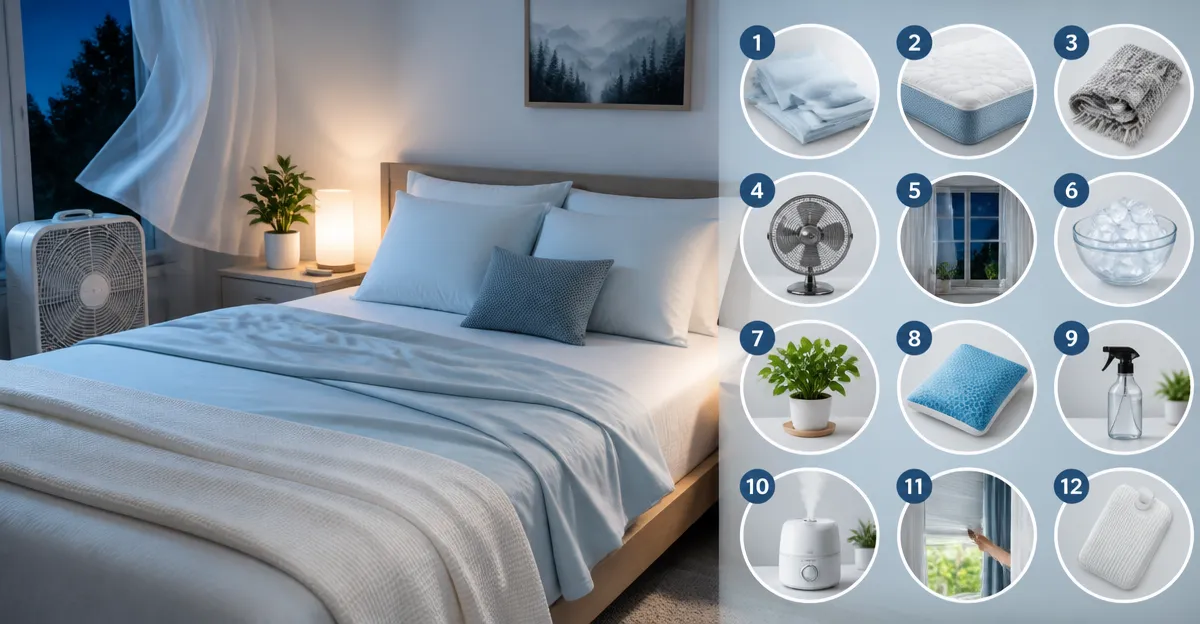
One night of overheating can disrupt sleep, reduce productivity, and impair health. This guide explains twelve evidence‑based strategies that lower the temperature of a sleeping surface without relying on air‑conditioning. Readers will learn how to adjust bedding, manage humidity, and employ affordable accessories that create a cooler micro‑climate. By following these steps, one can achieve a comfortable night’s rest even during the hottest months.
What You’ll Need (Optional)
- Cooling mattress topper or pad (e.g., Niagara Sleep Cooling Mattress Topper)
- Breathable waterproof protector (e.g., Hanherry Waterproof Mattress Protector)
- Fans, window treatments, and basic household supplies
Step 1 – Choose a Breathable Mattress Foundation
Heat accumulates most rapidly in dense, non‑breathable mattress cores. Selecting a mattress that incorporates airflow channels or gel‑infused layers reduces heat retention by up to 20 percent. If the existing mattress is unsuitable, a cooling mattress pad can provide a similar effect without a full replacement. The Niagara Sleep Cooling Mattress Topper adds a breathable, ultra‑soft layer that draws moisture away from the body, thanks to rayon derived from bamboo fibers, and is rated 4.3 stars by over 56,000 reviewers at $37.89.
Step 2 – Add a Moisture‑Wicking Mattress Protector
Even with a cooling topper, sweat can become trapped between the mattress and sheets, raising surface temperature. A waterproof protector that remains breathable prevents liquid from seeping through while allowing air circulation. The Hanherry Waterproof Mattress Protector utilizes a 100 percent waterproof TPU backing combined with 3D air fabric, providing a silent, cool sleep surface. It holds a 4.6‑star rating from 1,546 reviews and costs $26.99.
Step 3 – Optimize Pillow Selection
Pillows made from memory foam or synthetic down can retain heat, especially when used for several hours. Switching to a pillow with gel‑infused or open‑cell construction encourages airflow around the head and neck. While this guide does not recommend a specific pillow, the principle mirrors the cooling technologies found in the mattress pads discussed earlier. Users should look for products labeled “cooling,” “breathable,” or “gel‑infused.”
Step 4 – Use Light, Breathable Bedding
Heavy cotton flannel or polyester blends trap warmth, whereas lightweight cotton percale or linen fabrics promote evaporative cooling. Changing sheets to a percale weave can lower perceived temperature by 2‑3 °F. In addition, selecting a light‑colored duvet reflects rather than absorbs heat. This adjustment requires no purchase beyond a new sheet set, but it complements the cooling effect of the mattress topper.
Step 5 – Position Your Bed Strategically
The location of the bed within a room influences exposure to heat sources. Placing the bed away from exterior walls, direct sunlight, and heat‑producing electronics reduces radiative warming. If possible, orient the headboard toward a wall that remains cool during the night, such as an interior partition. Simple rearrangement can improve airflow and lower night‑time temperature without any additional cost.
Step 6 – Install Reflective Window Coverings
Sunlight entering through windows can raise indoor temperature by up to 15 °F. Installing blackout curtains with a reflective backing blocks solar gain while also darkening the room for better melatonin production. For a budget‑friendly option, magnetic blackout panels can be applied temporarily. This step works in tandem with the cooling mattress pad, ensuring that external heat does not offset the bed’s internal cooling mechanisms.
Step 7 – Employ a Portable Fan with a Bowl of Ice
Air movement accelerates evaporative cooling, and a fan positioned to blow over a shallow bowl of ice creates a DIY air‑conditioner effect. The fan circulates cold air across the mattress surface, while the ice slowly melts, absorbing heat from the surrounding air. Place the fan at the foot of the bed to avoid direct airflow onto the face, which can cause dryness. This low‑tech method adds several degrees of cooling without electricity‑intensive appliances.
Step 8 – Use a Dedicated Cooling Mattress Pad
For hot sleepers who require additional temperature regulation, a purpose‑built cooling pad can deliver consistent comfort. The Elegear Cooling Mattress Pad employs Arc‑Chill 3.0 fabric and a PCM (phase‑change material) layer that absorbs excess heat and releases it as the body cools. It features a deep‑pocket elastic fit, is machine‑washable, and holds a 4.3‑star rating from 391 reviewers at $48.99. This product is especially useful in climates with nightly temperature swings.
Step 9 – Try a Zoned Cooling Mattress Topper
Some sleepers benefit from targeted support combined with cooling. The Sleep Zone Cooling Mattress Topper incorporates a three‑zone design that distributes pressure while its NANOTEX technology wicks moisture and promotes airflow. Priced at $26.09 and rated 4.4 stars by over 22,000 reviewers, it offers an economical alternative to high‑tech systems while still delivering a cooler surface.
Step 10 – Consider a Water‑Based Bed Cooling System
When ambient temperatures exceed 85 °F, passive cooling may be insufficient. A water‑circulation system can lower mattress temperature by 7‑12 °F without electricity‑intensive compressors. The Adamson Bed Cooling System circulates chilled water through silicone tubes inside a 100 percent cotton pad, offering four fan speeds and a remote control. Although priced at $224.95 and carrying a 3.9‑star rating, it provides professional‑grade cooling for hot sleepers who cannot rely on conventional AC.
Step 11 – Reduce Bedroom Humidity
High humidity impairs the body’s ability to evaporate sweat, making a warm environment feel hotter. Using a small dehumidifier or placing moisture‑absorbing crystals (such as silica gel) near the bed can lower relative humidity by 5‑10 percent. When humidity is reduced, the cooling properties of mattress pads and breathable sheets become more effective. This step does not require a product purchase if a dehumidifier is already available.
Step 12 – Adopt a Pre‑Sleep Cooling Routine
Body temperature naturally drops during the night, but external factors can interfere. Taking a lukewarm shower 60‑90 minutes before bedtime, cooling the feet with a cold water soak, or using a chilled pillowcase can prime the body for a cooler sleep. Pair this routine with the previously described bedding adjustments for maximal effect. Consistency in the routine reinforces the body’s circadian rhythm, leading to deeper, more restorative sleep.
Tips & Pro Tips
- Rotate the cooling mattress topper every few weeks to maintain even wear and consistent airflow.
- When washing the Niagara Sleep Cooling Mattress Topper, use a gentle cycle and tumble dry on low to preserve its rayon fibers.
- Combine the Elegear Cooling Mattress Pad with a breathable protector to prevent any residual moisture from compromising the pad’s cooling fabric.
- Set the fan speed on the Adamson Bed Cooling System to the lowest comfortable setting during cooler months to avoid excessive cold.
Troubleshooting
Problem: The cooling pad feels warm after a few hours.
Solution: Ensure the deep‑pocket elastic fit is snug; a loose pad can shift and trap heat. Wash the pad according to manufacturer instructions to remove any buildup of sweat that may hinder moisture‑wicking.
Problem: The water‑based cooling system leaks.
Solution: Verify that all tube connections are secure and that the water level does not exceed the recommended mark. Place the base unit on a waterproof tray to protect flooring.
Conclusion
Cooling a bed without air‑conditioning is achievable through a combination of strategic bedding choices, airflow management, and targeted technology. By implementing the twelve steps outlined above, one can lower sleep‑environment temperature, improve sleep quality, and reduce reliance on energy‑intensive cooling systems. Readers are encouraged to experiment with the recommended products and simple household adjustments to discover the most effective personal solution.
Products Mentioned in This Guide
Frequently Asked Questions
What are the best breathable mattress foundations for a cooler sleep?
Choose a mattress with open‑cell foam, latex, or innerspring coils with airflow channels, and pair it with a breathable waterproof protector.
How can I use fans to lower my bed temperature without AC?
Place a box fan or oscillating fan near the foot of the bed and direct airflow across the sheets, or set a window fan to pull cool night air in.
Do cooling mattress toppers actually reduce body heat?
Yes, gel‑infused or phase‑change material toppers absorb and dissipate heat, keeping the surface several degrees cooler than a standard topper.
Can humidity control improve bed cooling?
Lower indoor humidity with a dehumidifier or by ventilating; drier air allows sweat to evaporate faster, enhancing perceived coolness.
What simple bedding changes help keep the bed cool?
Use lightweight, natural fabrics like cotton or bamboo, avoid heavy blankets, and flip the pillow to the cooler side each night.