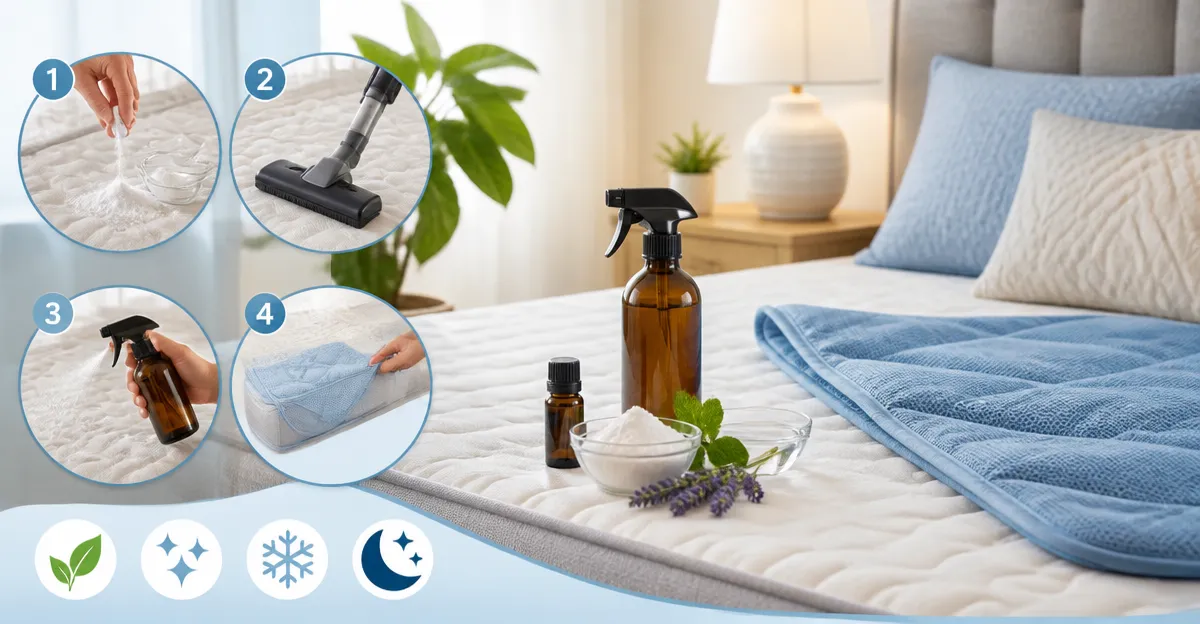
How to Safely Cool Your Mattress: Step‑by‑Step DIY, Non‑Toxic Solutions to Beat Night Sweats
Introduction
Night sweats can disrupt restorative sleep, leaving the sleeper feeling fatigued and uncomfortable. This guide explains how to create a cooler sleeping surface using safe, non‑toxic methods that anyone can implement. Readers will learn how to assess their current mattress, select appropriate cooling layers, and maintain optimal temperature regulation throughout the night. By following these steps, one can achieve a cooler, more comfortable sleep environment without sacrificing mattress longevity.
What You'll Need
- Cooling mattress pad or topper (e.g., Elegear Cooling Mattress Pad or Cozy Bliss Waterproof Cooling Mattress Pad)
- Breathable, moisture‑wicking sheets (cotton or bamboo)
- Waterproof barrier (optional for spills)
- Temperature‑regulating bedroom accessories (fan, cooling pillow, breathable pillowcase)
- Measuring tape, scissors, and a gentle detergent for maintenance
Step 1: Assess Your Mattress and Bedroom Environment
Begin by measuring the depth of your mattress to ensure any added layer will fit securely without shifting. Use a tape measure to record the exact depth from the top surface to the bottom frame; most modern mattresses range from 8 to 18 inches deep. Next, evaluate the current bedding for breathability—synthetic fabrics tend to trap heat, whereas natural fibers such as cotton, linen, or bamboo promote airflow. Finally, consider the ambient temperature of your bedroom; ideal sleeping temperatures fall between 60°F and 67°F, so a small fan or open window may be necessary before adding any product.
Step 2: Choose a Cooling Layer
The most effective way to lower surface temperature is to introduce a dedicated cooling layer that draws heat away from the body. Elegear Cooling Mattress Pad employs Arc‑Chill® 3.0 fabric combined with a PCM (phase‑change material) cooling print, providing instant cool‑to‑the‑touch feel and balanced temperature regulation throughout the night. Priced at $45.99 with a 4.3‑star rating from 353 reviews, it offers deep pockets for mattresses up to 18 inches, machine‑washable construction, and OEKO‑TEX certification for skin‑friendly comfort. For a more budget‑friendly alternative, Cozy Bliss Waterproof Cooling Mattress Pad utilizes a Q‑Max >0.45 cooling technology that reduces skin temperature by 4–9°F, while also providing 100% waterproof protection. At $19.99 and a 4.1‑star rating, it is an economical choice for hot sleepers who also need spill resistance.
When selecting a product, consider the following criteria:
- Cooling technology (fabric vs. PCM vs. Q‑Max)
- Waterproof layer (important for spills or night‑time sweating)
- Fit compatibility with your mattress depth
- Ease of care (machine washable vs. spot clean only)
Step 3: Add Breathable Protection
Even with a cooling pad, a breathable protector can enhance airflow and safeguard the mattress from moisture. The DOWNCOOL Waterproof Mattress Topper combines a bamboo‑derived viscose surface with a waterproof barrier, delivering a soft, cool touch while preventing liquids from reaching the mattress. Priced at $44.99 with a 4.6‑star rating from 2,383 reviews, it also includes a thin gel memory foam layer for pressure relief. If a lighter, polyester‑based option is preferred, the MATBEBY Cooling Mattress Pad offers a quilted design with 100% polyester microfiber filling, deep‑pocket fit up to 21 inches, and machine‑washable convenience at $31.99 (4.5‑star rating, 43,909 reviews). Both products are designed to stay in place and allow continuous airflow, which is essential for reducing heat buildup.
Install the protector by aligning the elastic skirt with the mattress edges, ensuring a snug fit that prevents bunching. For optimal performance, place the cooling pad directly on top of the protector so the cooling fabric contacts the skin without an intervening sheet.
Step 4: Implement Temperature Regulation Accessories
Beyond the mattress surface, bedroom accessories can further moderate temperature. A low‑noise oscillating fan positioned near the headboard circulates cool air without disturbing sleep. Pair the fan with a breathable pillowcase made from bamboo or linen to allow heat to escape from the head region. If a pillow with built‑in cooling gel is preferred, select one that does not contain synthetic foams that retain heat. Additionally, consider a lightweight, breathable sheet set such as 100% cotton percale; these fabrics wick moisture and promote airflow.
For those who experience severe night sweats, a moisture‑absorbing mattress topper can be beneficial. The Niagara Sleep Solution Cotton Mattress Pad features a 100% cotton top that feels cool, sweat‑absorbent, and free from chemicals like latex or formaldehyde. Priced at $33.99 with a 4.3‑star rating from 4,707 reviews, it adds a pillow‑top feel while maintaining breathability. Use this pad as the final layer before the fitted sheet to capture any residual moisture.
Step 5: Maintain Cleanliness and Performance
Regular maintenance ensures that cooling properties remain effective over time. Follow the manufacturer's care instructions: most cooling pads are machine washable in cold water with low tumble drying. Avoid bleach and fabric softeners, as they can impair moisture‑wicking performance. After washing, allow the pad to air dry completely before reinstalling to prevent mold growth. For waterproof toppers, spot‑clean spills promptly and allow the surface to dry before covering with bedding.
Periodically rotate the mattress and cooling pad to distribute wear evenly, which also helps maintain consistent temperature regulation across the surface. Inspect elastic edges for signs of stretch loss; a well‑fitted pad should remain snug without slipping.
Tips & Pro Tips
- Place the cooling pad directly on the mattress without an extra sheet underneath; this maximizes contact with the cooling fabric.
- Use a low‑humidity dehumidifier in humid climates to reduce moisture that can make the sleeping surface feel clammy.
- Keep bedroom curtains closed during the day to block solar heat gain, which can raise nighttime temperatures.
- Consider a breathable mattress foundation (slatted bed frame) rather than a solid box spring, as this improves airflow underneath the mattress.
- For travelers, a portable cooling pillow insert can provide temporary relief without the need for a full‑size pad.
Troubleshooting
Problem: The cooling pad feels warm after a few hours.
Solution: Ensure the pad is not folded or bunched; a misaligned fit can trap heat. Verify that the bedroom temperature is within the recommended range and increase fan speed if necessary.
Problem: The pad slips during the night.
Solution: Choose a product with deep‑pocket elastic edges (e.g., Cozy Bliss or MATBEBY) and ensure the mattress is clean and dry before installation.
Problem: Persistent odor after washing.
Solution: Air the pad outdoors for several hours; many synthetic cooling fabrics release a mild scent initially that dissipates with ventilation.
Conclusion
By assessing the mattress depth, selecting an appropriate cooling layer, adding breathable protection, and employing temperature‑regulating accessories, one can effectively combat night sweats without relying on chemical coolants. Regular maintenance preserves the performance of each component, ensuring a consistently cool and comfortable sleep surface. Implement these steps to transform restless, hot nights into restorative, cool sleep experiences.
Products Mentioned in This Guide
Frequently Asked Questions
What non‑toxic materials can I use to cool my mattress?
Choose breathable cotton or bamboo sheets, a cooling mattress pad made of gel‑infused memory foam, and a moisture‑wicking pillow cover.
How do I determine if my mattress needs a cooling topper?
If you consistently wake up feeling hot or notice sweat stains on your sheets, a cooling topper can improve temperature regulation.
Can a waterproof barrier affect mattress cooling?
A thin, breathable waterproof layer won’t trap heat, but a heavy plastic sheet can reduce airflow and should be avoided.
Do fans or room temperature impact the effectiveness of a cooling pad?
Yes, keeping the room between 60‑67°F and using a fan enhances the pad’s cooling performance.
How often should I replace a cooling mattress pad?
Replace it every 2‑3 years or when the cooling gel loses its firmness to maintain optimal temperature control.